Grow food

Twenty crops worth the space

These are the vegetables and herbs that crop reliably in a home garden and taste better picked than bought. Each guide gives the method, spacing and time to harvest. For when to sow in your climate, use the planting calendar.

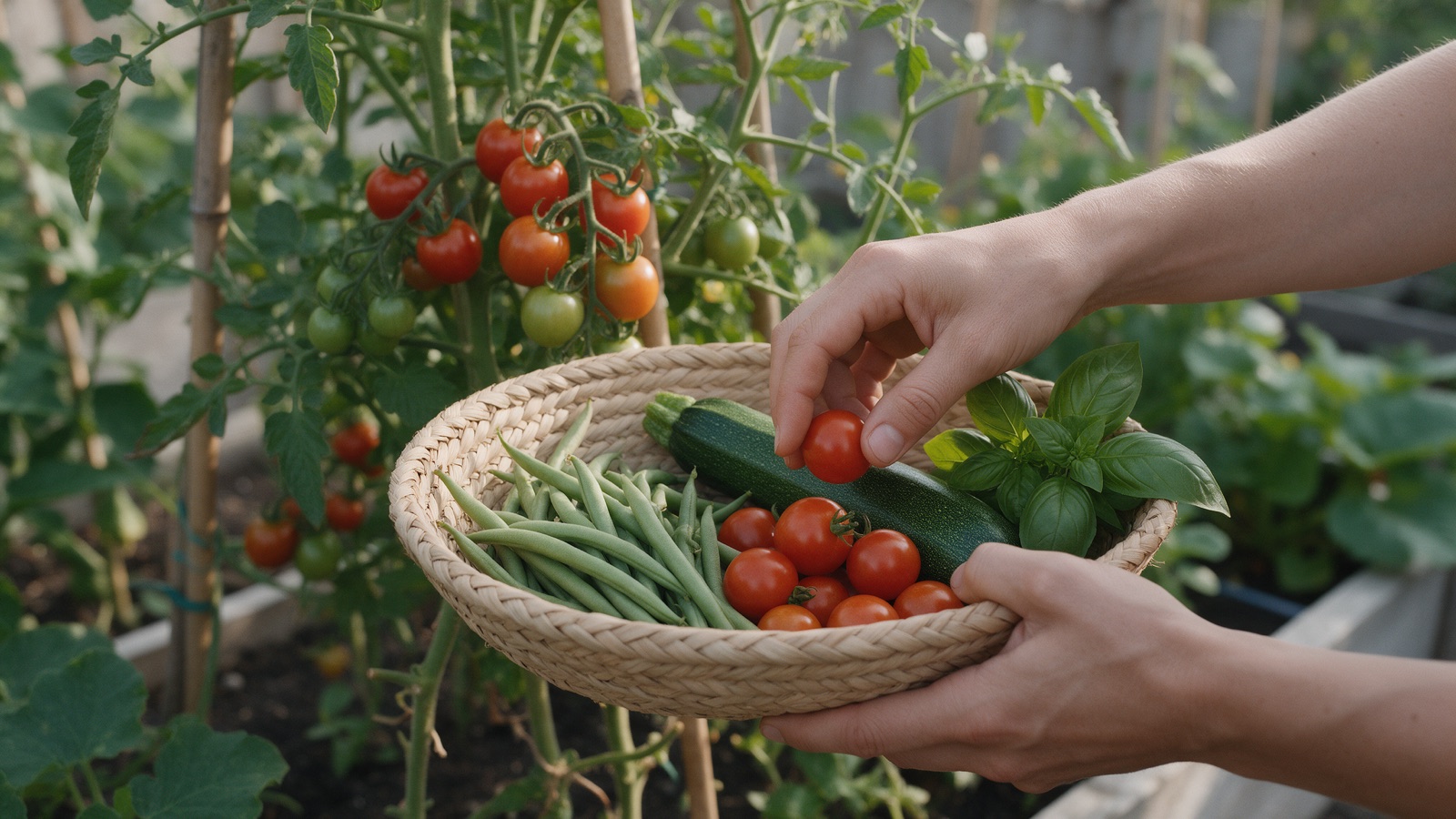
Hands picking cherry tomatoes into a basket of beans, zucchini and basil

Summer crops

Warm-season crops need warm soil and long days. In cool and temperate gardens, sow them in spring once frost has passed. In the subtropics, the best windows are late winter to spring and again in late summer, because the wet heat of midsummer brings mildew and fruit fly.

Tomato

Solanum lycopersicum

Start
Seed in trays in warmth, plant out at 6 to 8 weeks
Space
50 to 60 cm
Harvest
10 to 12 weeks after planting out
Sun
Full sun, 6 hours or more

Tip: Plant deep, burying the stem up to the first true leaves, and put the stake in at the same time. Water the soil, not the leaves. Where fruit fly is a problem, bag the trusses or grow under fine netting.

Capsicum and chilli

Capsicum annuum

Start
Seed in trays somewhere warm; slow to germinate in cool weather
Space
40 to 50 cm
Harvest
10 to 12 weeks after planting out
Sun
Full sun

Tip: In frost-free gardens, chillies often live through winter and crop again the next year. Cut them back by a third in early spring.

Zucchini

Cucurbita pepo

Start
Sow 2 or 3 seeds where they will grow, keep the strongest
Space
90 cm
Harvest
6 to 8 weeks from sowing
Sun
Full sun

Tip: Pick at 15 to 20 cm. If small fruit shrivel from the tip, they were not pollinated: brush the centre of a male flower into a female one (the one with a tiny zucchini behind it) in the morning.

Cucumber

Cucumis sativus

Start
Sow direct into warm soil
Space
40 cm along a trellis
Harvest
8 to 10 weeks from sowing
Sun
Full sun

Tip: Grow them up a trellis. The fruit stays clean and straight, the leaves dry faster, and you use a quarter of the ground.

Pumpkin

Cucurbita maxima and C. moschata

Start
Sow 3 seeds on a low mound of compost-rich soil
Space
Allow 1.5 to 2 m for the vines
Harvest
14 to 18 weeks from sowing
Sun
Full sun

Tip: A pumpkin is ready when the stalk dries and corks and your fingernail will not dent the skin. Cut with a length of stalk and leave it in the sun for a week or two to cure before storing.

Beans

Phaseolus vulgaris

Start
Sow direct, 3 cm deep, into warm soil
Space
15 cm; climbing beans along a frame
Harvest
8 to 10 weeks for dwarf, 10 to 12 for climbing
Sun
Full sun

Tip: Do not soak the seed, and do not water again until shoots appear, or it may rot. Sow a short row every three weeks for a steady supply rather than one glut.

Sweet corn

Zea mays

Start
Sow direct in a block, not a single row
Space
25 to 30 cm each way
Harvest
10 to 14 weeks from sowing
Sun
Full sun

Tip: Corn is pollinated by wind, so a block of at least four by four plants gives full cobs. It is ready when the silks turn brown and a kernel pressed with a fingernail gives milky juice.
Leaves and herbs

Leafy crops are the quickest return on a small space. Pick the outer leaves and most of them keep going for weeks.

Lettuce

Lactuca sativa

Start
Sow thinly and shallow, or plant seedlings
Space
25 to 30 cm
Harvest
6 to 8 weeks for loose-leaf types
Sun
Sun in cool months, afternoon shade in summer

Tip: Lettuce seed often will not germinate in hot soil. In warm months, sow in a shaded tray or in the evening and keep it moist.

Silverbeet

Beta vulgaris, Cicla Group

Start
Seed soaked overnight, or seedlings
Space
30 cm
Harvest
From 8 weeks, then for months
Sun
Sun or part shade

Tip: Take the outer stems by pulling down and twisting at the base. Two or three plants are plenty for most households.

Coriander

Coriandrum sativum

Start
Sow direct; it dislikes being moved
Space
10 to 15 cm
Harvest
6 to 8 weeks for leaves
Sun
Sun in cool months, light shade when warm

Tip: Coriander runs to seed fast in heat. Sow a pinch every few weeks, and let the last plants flower: the green seed is good in cooking and the dry seed resows itself.

Basil

Ocimum basilicum

Start
Seed in warmth, or seedlings
Space
30 cm
Harvest
From 6 weeks
Sun
Full sun and warmth

Tip: Pinch out the flower spikes as they form and pick from the top, just above a pair of leaves. Basil sulks in cold nights and frost kills it, so do not hurry it out in spring.

Parsley

Petroselinum crispum

Start
Soak seed overnight; it can take 3 weeks to come up
Space
20 to 25 cm
Harvest
From 10 weeks
Sun
Sun or part shade

Tip: Parsley grows for about a year and then flowers and stops. Sow a fresh patch before the old one bolts.

Roots

Root crops want loose, stone-free soil with no fresh manure. Sow them where they will grow; most do not transplant well.

Carrot

Daucus carota subsp. sativus

Start
Sow direct, very shallow
Space
Thin to 5 cm
Harvest
10 to 16 weeks
Sun
Full sun

Tip: The seed must stay moist until it comes up, which can take two weeks. Lay a plank or wet hessian over the row and lift it daily to check. Fresh manure makes forked roots.

Beetroot

Beta vulgaris

Start
Sow direct, 1 to 2 cm deep
Space
Thin to 10 cm
Harvest
8 to 10 weeks
Sun
Full sun

Tip: Each seed is a cluster that gives several seedlings, so thin early. The young leaves are good in salads.

Radish

Raphanus sativus

Start
Sow direct
Space
5 cm
Harvest
4 to 6 weeks
Sun
Sun or part shade

Tip: Radishes turn woody and hot if left too long, so sow small amounts often. They are a good first crop for children.

Potato

Solanum tuberosum

Start
Plant certified seed potatoes 10 cm deep
Space
30 cm, rows 60 to 75 cm apart
Harvest
New potatoes at 10 to 12 weeks, main crop at 14 to 18
Sun
Full sun

Tip: Use certified seed potatoes rather than ones from the shop, which can carry disease. Mound soil or straw around the stems as they grow; potatoes that see light turn green and should not be eaten.

Cool-season crops

These grow through autumn and winter and finish in spring. In the subtropics, this is the main vegetable season.

Peas and snow peas

Pisum sativum

Start
Sow direct, 3 cm deep, beside a trellis
Space
5 to 8 cm
Harvest
10 to 12 weeks
Sun
Full sun

Tip: Water well before sowing, then not again until shoots show. Pick snow peas while they are still flat, and shelling peas when the pods are plump but still bright green.

Broad beans

Vicia faba

Start
Sow direct, 5 cm deep
Space
20 cm
Harvest
16 to 22 weeks
Sun
Full sun, some shelter from wind

Tip: Once the first pods set, pinch out the soft tips. It sends energy to the pods and removes the growth aphids like best. Run string around the patch to hold the plants up.

Broccoli

Brassica oleracea, Italica Group

Start
Seedlings, or seed in trays
Space
50 cm
Harvest
10 to 14 weeks after planting out
Sun
Full sun

Tip: Cut the main head while the buds are tight. Side shoots follow for weeks. Cover young plants with fine netting to keep cabbage white butterflies from laying eggs.

Garlic

Allium sativum

Start
Plant single cloves, pointed end up, 3 to 5 cm deep
Space
10 to 15 cm
Harvest
Late spring to early summer, when about half the leaves have browned
Sun
Full sun

Tip: Buy seed garlic grown in Australia and suited to your climate. Imported shop garlic is often treated to stop it sprouting. In warm winters, ask for varieties sold for subtropical gardens.

Want to know when to sow any of these? The planting calendar shows each crop by month for subtropical, temperate and cool climates.

Get the garden letter

Seasonal growing notes and new Growing at Home guides, in the Christopher Kaye Design garden newsletter. Unsubscribe at any time. See the privacy policy.