Cut flowers

A cutting garden in a single bed

A bed two metres by one, planted for picking, gives a jug of flowers most weeks of the warm season and another run in spring. Grow flowers in rows like vegetables, cut them hard, and they keep coming.

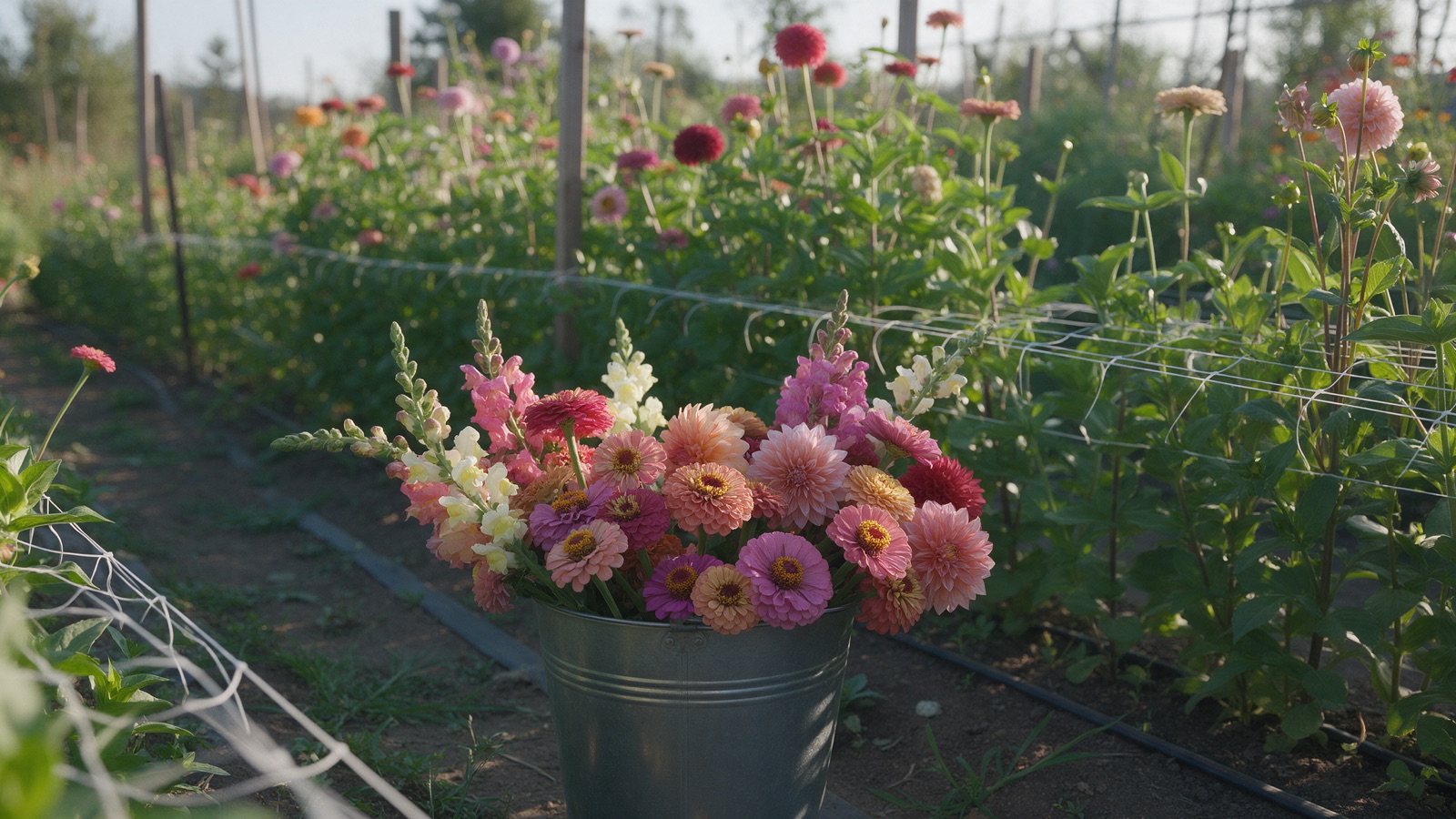
A bucket of freshly cut zinnias, dahlias and snapdragons beside cutting-garden rows

Plan the bed

A cutting garden is a working bed, not a border. You are growing stems, so plant closer than you would for display, give the plants support, and expect to cut most of what flowers.

  • Full sun. Six hours at least. Most cut flowers stretch and flop in shade.
  • Rows you can reach. A bed no wider than 1.2 m lets you cut from both sides without stepping on the soil.
  • Support early. Stretch a layer of wide-mesh netting 30 to 40 cm above the bed when you plant, and let the stems grow through it. Straight stems are the whole point.
  • A mix of shapes. Choose a few focal flowers (dahlia, sunflower, zinnia), a spike or two (snapdragon, larkspur) and something smaller to fill (strawflower, calendula).
  • Succession. Sow zinnias and sunflowers two or three times, a month apart, for flowers over a longer season.

Warm-season flowers

Sow these in spring once the soil is warm. In the subtropics, they flower through late spring and summer and, in the case of zinnias and sunflowers, into autumn.

Zinnia

Zinnia elegans

Start
Sow direct into warm soil, or in trays
Space
30 cm
Flowers
8 to 10 weeks from sowing
Vase
About a week

Tip: Pinch the growing tip when plants are about 30 cm tall for more, longer stems. To test if a flower is ready, hold the stem 20 cm below the head and shake it gently: if it bends, wait a few days.

Sunflower

Helianthus annuus

Start
Sow direct
Space
15 to 30 cm; closer gives smaller heads that suit a vase
Flowers
8 to 12 weeks
Vase
7 to 10 days

Tip: For cutting, choose pollenless varieties so the table stays clean. Single-stem types give one perfect flower; branching types give many smaller ones over weeks. Cut when the petals are just lifting.

Lisianthus

Eustoma grandiflorum

Start
Buy seedlings; the seed is dust-fine and very slow
Space
15 to 20 cm
Flowers
About 12 weeks from planting
Vase
2 weeks or more

Tip: Rose-like flowers on long stems, and one of the longest-lasting cut flowers you can grow. Keep the young plants evenly moist, and cut when two or three buds on the stem have opened.

Dahlia

Dahlia hybrids

Start
Plant tubers 10 to 15 cm deep, with a stake beside each
Space
45 to 60 cm
Flowers
About 10 to 12 weeks from planting, until autumn
Vase
4 to 6 days

Tip: Do not water the tubers until shoots appear, or they rot. Cut flowers that are almost fully open, since dahlias barely open further in the vase. In cold, wet winters, lift the tubers and store them dry. In humid subtropical summers, expect mildew late in the season.

Cool-season flowers

Sow or plant most of these in autumn. They grow slowly through winter and flower from late winter into spring, often when little else is in bloom. Calendula and strawflower can also be sown in early spring.

Sweet pea

Lathyrus odoratus

Start
Sow direct, 2 to 3 cm deep, beside a 1.8 m trellis
Space
10 cm
Flowers
Spring
Vase
4 to 5 days

Tip: Pick every two or three days or the vines set seed and stop. The seeds and pods are poisonous, so keep them away from the edible peas and from children.

Snapdragon

Antirrhinum majus

Start
Seedlings, or seed pressed onto the surface (it needs light)
Space
20 to 25 cm
Flowers
12 to 16 weeks
Vase
About a week

Tip: Pinch young plants for more stems. Cut stems bend upwards if laid flat, so stand them upright in a bucket straight after picking.

Stock

Matthiola incana

Start
Seedlings, or seed in trays
Space
20 cm
Flowers
10 to 14 weeks
Vase
About a week

Tip: Stock is grown for its clove scent. The stems foul water quickly, so strip every leaf below the waterline and change the water daily.

Calendula

Calendula officinalis

Start
Sow direct
Space
30 cm
Flowers
8 to 10 weeks
Vase
About a week

Tip: One of the easiest flowers to grow, and the petals can be eaten in salads. Keep picking and it flowers for months.

Strawflower

Xerochrysum bracteatum

Start
Press seed onto the surface; it needs light to germinate
Space
30 cm
Flowers
About 12 weeks
Vase
2 weeks fresh, and keeps for years dried

Tip: An Australian native everlasting daisy. Cut when the outer petals have just begun to open; flowers picked fully open go fluffy as they dry.

Larkspur

Consolida ajacis

Start
Sow direct; it does not like being moved
Space
20 cm
Flowers
Spring
Vase
About a week, and dries well

Tip: Larkspur seed germinates best in cool soil, so autumn sowing works far better than spring. All parts are poisonous if eaten.

Ranunculus

Ranunculus asiaticus

Start
Soak corms 3 to 4 hours, plant claws down, 5 cm deep
Space
15 cm
Flowers
Late winter to spring
Vase
7 to 10 days

Tip: Pick when the bud shows full colour and feels soft when squeezed, like a marshmallow. Ranunculus open slowly in the vase and last well. In the subtropics, plant in late autumn and expect a shorter season.

Anemone

Anemone coronaria

Start
Soak corms 3 to 4 hours, plant 5 cm deep
Space
15 cm
Flowers
Late winter to spring
Vase
About a week

Tip: Cut when the petals have just lifted away from the dark centre. Each corm gives many stems if you keep picking.
Picking and vase life

  1. Pick in the cool of the day. Early morning or evening, when stems are full of water.
  2. Take a clean bucket. Wash it with hot soapy water first. Bacteria in the water block stems and shorten vase life more than anything else.
  3. Strip low leaves. Remove every leaf that would sit below the water.
  4. Rest them. Stand the bucket somewhere cool and dark for a few hours, or overnight, before arranging.
  5. Recut and refresh. Trim the stems at an angle and change the water every day or two.

Get the garden letter

Seasonal growing notes and new Growing at Home guides, in the Christopher Kaye Design garden newsletter. Unsubscribe at any time. See the privacy policy.